+86 136 0285 3630 asun@gdyatian.com 17 Fengying Road, Taiping Town, Conghua District, Guangzhou City, Guangdong Province
Views: 0 Author: Site Editor Publish Time: 2026-10-26 Origin: Site
The electric tourist car price depends on more than the vehicle itself. Seating capacity, battery configuration, motor specifications, body design, customization, and order quantity can all affect the final quotation.
For resorts, hotels, tourist attractions, golf courses, and commercial operators, the right vehicle should match daily passenger demand and operating conditions. Buyers should also consider shipping, import duties, charging requirements, and maintenance when planning their budgets.
This guide explains the main factors that influence electric tourist car prices and what to prepare before requesting a quotation.
Table of Contents
Seating capacity is one of the first factors to consider. A compact vehicle for small groups serves different needs from a larger sightseeing vehicle designed for group transfers.
Larger vehicles may require different body structures, seating layouts, motors, and battery configurations. However, price differences depend on the specific model and its equipment, not seat count alone.
Yatian offers electric sightseeing vehicle configurations for different commercial applications. Explore the electric sightseeing vehicle range to compare options for tourist attractions, hotels, and resorts.
Battery selection affects the vehicle's purchase price, driving range, charging requirements, and long-term operating costs. The right configuration depends on daily route distance, passenger load, terrain, and available charging time.
Before choosing a battery, buyers should estimate the distance the vehicle will travel each day and determine when it can be recharged. A vehicle operating on short hotel shuttle routes may have different requirements from one serving a large scenic area.
Ask the manufacturer to confirm the available battery types, capacity, stated range, charging time, and warranty terms for the selected model.
Motor specifications should match the intended route and operating load. Buyers should consider passenger weight, slopes, stop frequency, and expected daily operating hours.
A vehicle used on flat internal roads may have different requirements from one operating on routes with sustained gradients. Request model-specific technical information instead of assuming that all electric tourist cars have the same performance.
Open-sided sightseeing vehicles provide an unobstructed view and convenient passenger access. Enclosed models may offer additional weather protection, depending on their design and equipment.
Other options may include custom body colors, logos, seat materials, canopies, windshields, rain curtains, or selected accessories. The availability and cost of each option should be confirmed for the model being quoted.
For details about available options, visit Yatian's customization service.
The number of vehicles ordered can affect production planning, packaging, shipping arrangements, and the final quotation. Delivery destination also matters because freight charges, import duties, taxes, and local handling costs vary by market.
When comparing suppliers, confirm whether the quoted price includes the vehicle only or also covers packaging, shipping, insurance, and other charges. Make sure quotations use the same delivery terms before comparing totals.
Electric tourist vehicles are available in different seating layouts and body styles. Buyers should compare vehicles based on their intended use rather than relying on general price ranges that may not match the required configuration.
Smaller vehicles may suit hotels, resorts, private estates, and facilities that need to move a few passengers at a time. They can be useful for guest transfers and short internal routes.
Review the vehicle's seating layout, available equipment, and route requirements before deciding whether a compact model meets your needs.
Vehicles with more seats can help operators transport larger groups on planned routes. They may be suitable for tourist attractions, resorts, golf facilities, and other commercial venues.
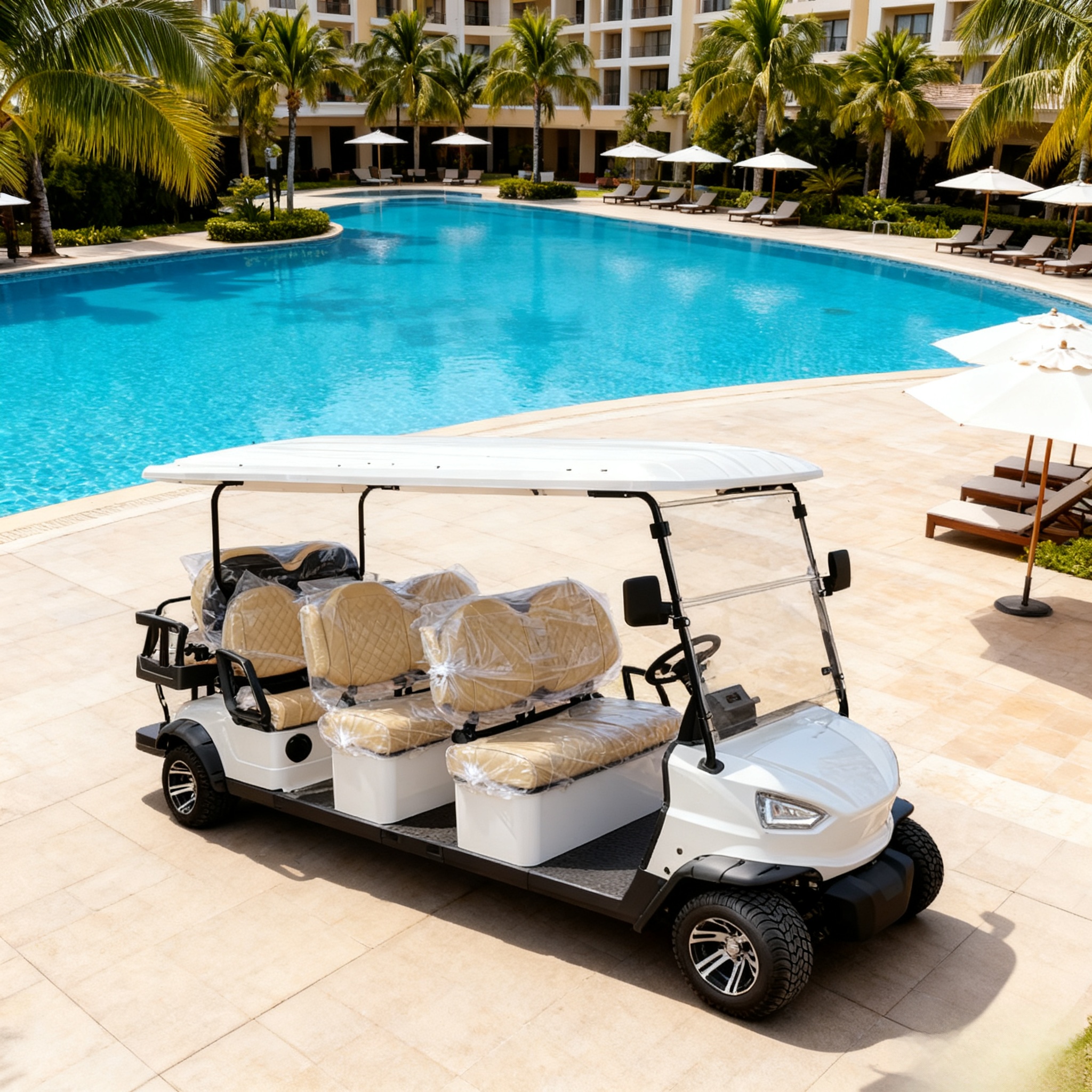
For example, the Yatian GQ62C 8-Seater Electric Sightseeing Golf Cart is listed for sightseeing and shuttle applications. Check the product page for its published specifications and confirm the required configuration with the manufacturer.
Open-sided vehicles may suit sightseeing routes where passengers want a clear view and easy access. Enclosed vehicles may be preferable when weather protection is important.
The cost difference depends on the vehicle structure and selected equipment. Buyers should request a quotation for the exact body style and options instead of assuming a fixed percentage difference.
The purchase price is only one part of the investment. Battery configuration, energy consumption, charging schedules, and route conditions can affect daily operating costs.
Before choosing a vehicle, consider the following:
Daily travel distance: Estimate the total distance covered during a normal operating day.
Passenger load: Consider the typical and maximum number of passengers.
Route conditions: Record slopes, road surfaces, stops, and turning requirements.
Charging schedule: Determine when vehicles can be charged between operating periods.
Battery warranty: Confirm the warranty period, coverage, and any maintenance requirements.
Replacement and service support: Ask about battery replacement availability and access to spare parts.
Do not compare battery options based on capacity or range claims alone. Confirm the test conditions behind the stated range and ask how the selected configuration fits your actual route.
A realistic budget should include costs that may arise after the vehicle leaves the factory.
For overseas buyers, freight, customs duties, taxes, port handling, and inland delivery can affect the total landed cost. These charges depend on the destination country and shipping arrangement.
Ask the supplier to clarify which costs are included in the quotation and which must be arranged separately.
Charging costs depend on the selected vehicle and charger, local electricity prices, charging frequency, and daily usage. Some sites may also need electrical upgrades or installation work.
Confirm charger compatibility, input voltage, charging time, and installation requirements before placing an order.
Routine checks may include tires, brakes, batteries, steering, and other vehicle components. Maintenance needs vary by model and operating conditions.
Before buying, ask about the maintenance schedule, spare-parts availability, warranty coverage, and service support. These details can help buyers assess long-term operating costs.
Insurance requirements and operating rules vary by location and intended use. Buyers should check whether the vehicle can be used on the planned routes and what local registration, insurance, or certification documents may be required.
Do not assume that a sightseeing vehicle is approved for public-road use in every market. Confirm the requirements with the relevant local authorities.
A lower initial price does not always mean a lower total cost. To make a fair comparison, ask each supplier to quote against the same requirements.
Use this checklist:
Seating capacity and passenger layout
Vehicle model and body style
Battery type and capacity
Motor specifications
Stated driving range and test conditions
Charger and charging requirements
Standard equipment and optional accessories
Warranty terms and spare-parts support
Order quantity and production lead time
Packaging, shipping, and delivery terms
Required certificates and documents for the destination market
Review the technical details and commercial terms together. This helps reduce misunderstandings and makes quotations easier to compare.
To receive a quotation that matches your project, prepare the following information before contacting a manufacturer:
Application: Hotel shuttle, resort transport, scenic tours, golf facilities, or another commercial use.
Seating capacity: The number of passengers required for each trip.
Daily route: Approximate distance, terrain, slopes, and operating hours.
Vehicle design: Open-sided or enclosed body, preferred appearance, and optional features.
Battery requirements: Expected range and available charging time.
Order quantity: Number of vehicles required.
Delivery destination: Country, city, and preferred delivery arrangement.
Compliance requirements: Any local registration, certification, or documentation needs.
Yatian supplies electric sightseeing vehicles for commercial tourism and hospitality applications. Browse the Yatian product range and contact the team through the official contact page to discuss your requirements and request a model-specific quotation.
The electric tourist car price depends on seating capacity, battery and motor configuration, vehicle design, optional features, order quantity, and delivery destination. Buyers should also consider charging, maintenance, shipping, and local compliance when calculating the total investment.
The most effective way to compare options is to define your operating requirements first and request quotations based on the same specifications. This helps you select a vehicle that fits your passenger demand, routes, and budget.
The main factors include seating capacity, battery configuration, motor specifications, body design, customization, order quantity, and delivery destination.
A higher-capacity battery may increase the initial price. It can also provide a longer driving range, depending on the vehicle configuration and operating conditions.
Yes. Options such as custom colors, logos, seat materials, canopies, and weather-protection equipment may affect the final price. Availability and cost should be confirmed for each model.
Buyers may need to budget for shipping, import duties, taxes, charging equipment, electricity, maintenance, spare parts, and insurance.
Provide the intended application, seating capacity, daily route, battery requirements, preferred options, order quantity, and delivery destination. The manufacturer can then quote against the required configuration.