+86 136 0285 3630 asun@gdyatian.com 17 Fengying Road, Taiping Town, Conghua District, Guangzhou City, Guangdong Province
Views: 0 Author: Site Editor Publish Time: 2026-07-13 Origin: Site
Selecting the wrong utility vehicle ruins hunts. Gas-powered ATVs dominate land management, but highly modified, purpose-built Hunting Golf Carts challenge that tradition. Noisy exhaust spooks game long before you reach the stand. Inadequate terrain capability leaves you stuck in clay. Unnecessary maintenance creates liabilities during peak season. This objective evaluation compares both platforms directly. We evaluate stealth, payload, terrain handling, and implementation realities. You will learn exactly where electric carts excel and where raw ATV power remains necessary. We break down the technical modifications required to make a cart off-road viable. Finally, we provide a clear framework to match the right vehicle to your specific topography and hunting style.
Stealth vs. Power: Electric hunting golf carts offer unparalleled acoustic and olfactory stealth, while ATVs provide superior raw horsepower and suspension travel for extreme environments.
Terrain Dictates the Platform: Golf carts excel on flat to moderate terrain, established trails, and large acreage; ATVs are mandatory for deep mud, water crossings, and steep, rocky inclines.
Safety and Compliance: Golf carts present a lower rollover and injury risk—often featuring wider wheelbases—and are increasingly required by hunting clubs that ban noisy ATVs.
Acoustic discipline dictates hunting success. Internal combustion engines generate significant decibel levels. This noise travels for miles across open timber, especially on crisp, clear mornings. High decibel levels alter local wildlife patterns permanently. Mature bucks learn to associate ATV engine noise with human intrusion. They shift their movement to nocturnal hours. Electric vehicles solve this acoustic problem entirely. They operate with a faint hum that blends into natural wind noise. You can drive within a few hundred yards of a bedding area without triggering an alarm response.
Scent control is equally critical. Gas engines emit strong exhaust fumes. These fumes disperse widely through the woods, riding thermal currents and wind streams. They leave a lingering olfactory footprint along your access trails. Zero-emission electric platforms eliminate this scent dispersion. You can drive directly to your stand without leaving a trail of unburned hydrocarbons. This scent discipline gives bowhunters a massive tactical advantage. When you eliminate the smell of gas and oil from your hunting clothes and equipment, your success rates climb.
Consider the mechanical noises beyond the engine. ATVs utilize continuously variable transmissions (CVTs) that whine loudly at high RPMs. The aggressive tire treads on ATVs slap against hard-packed dirt and gravel. While modified carts also use aggressive tires, their lower speeds and lack of engine vibration keep the overall acoustic footprint minimal. You hear the woods around you when driving an electric cart. You hear nothing but the engine when riding an ATV.
Every vehicle has strict operational thresholds. Rut depth, incline grades, and water crossings dictate your choice. ATVs handle deep mud and rushing water with ease. They feature high factory ground clearance and sealed intakes. Carts require significant modifications to handle moderate ruts. Even lifted carts struggle in deep, sticky clay. Steep inclines demand high torque and aggressive traction. If your property features 30-degree inclines covered in loose shale, a standard electric cart will spin out and fail.
Vehicle width impacts your ability to navigate dense timber. Narrow ATVs thread through tight trees effortlessly. Modified carts often feature wider stances for stability. This extra width requires wider trails. You must measure your existing trail network before choosing. Narrow trails might force you to cut new paths for a wider vehicle. A standard ATV measures around 46 to 48 inches wide. A lifted cart with offset wheels can easily exceed 52 inches. Those four inches make a massive difference when navigating old logging roads overgrown with briars.
Breakover angles also matter. When crossing deep ditches or climbing over downed logs, the distance between the front and rear wheels determines if you get high-centered. ATVs have shorter wheelbases and higher belly clearance. They crawl over logs easily. Golf carts have longer wheelbases. Even with a 6-inch lift, a cart can drag its battery box on a large log. You must carry a chainsaw to clear trails for a cart, whereas an ATV can often just power over the obstacle.
Hauling gear requires structural integrity. You must transport feed, tree stands, and harvested game safely. ATVs utilize heavy-duty steel frames designed for impact. They handle heavy tongue weights for small trailers. Carts use lighter aluminum or steel frames. You must respect their structural limits when hauling heavy loads. Overloading a cart frame causes permanent bending or stress fractures. If you drop 500 pounds of corn into the back of a standard cart, the rear suspension will bottom out, and the front tires will lose steering traction.
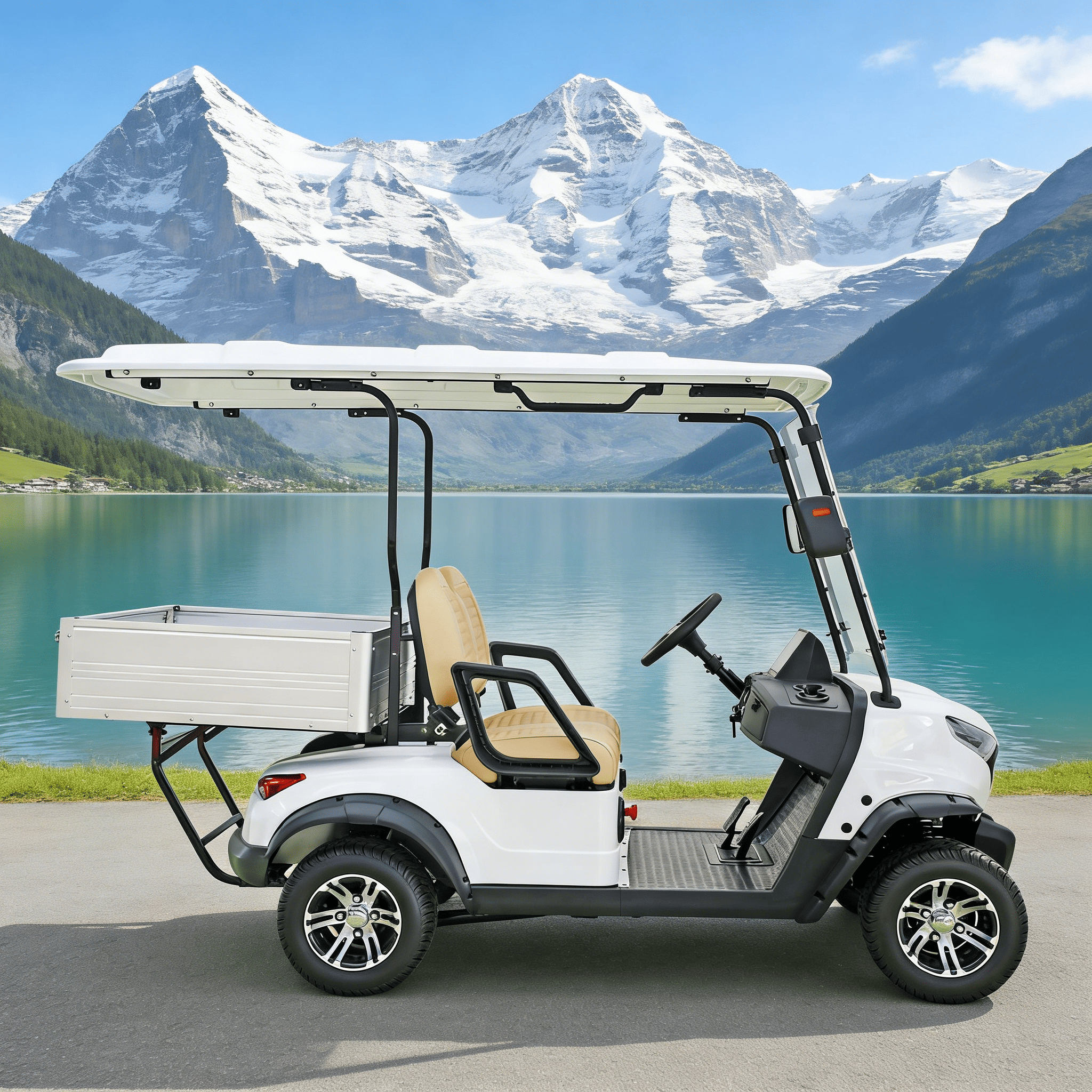
Utility features separate workhorses from recreational toys. Mechanical dump beds are essential for land management. They make spreading feed or moving dirt efficient. Passenger configurations also matter. A 4-seater cart transports your entire crew comfortably. However, rear passengers shift weight behind the rear axle. This weight distribution impacts front-wheel traction on steep hills. When climbing a steep grade with two heavy hunters on the back seat, the front wheels of a cart can lift off the ground. You must distribute weight forward to maintain steering control.
Towing capacity differs wildly. A 700cc ATV can tow 1,500 pounds of logs or a heavy implement like a disc harrow. An electric cart is designed to move people, not pull plows. While you can tow a small utility trailer with a cart, pulling heavy dead weight overheats the electric motor and controller. If your land management plan requires heavy towing, the cart is the wrong tool for that specific job.
Modern 48V and 72V AC drive systems dominate the market. These AC motors provide massive torque advantages over older DC motors. They maintain speed efficiently while climbing moderate hills. This technical shift makes electric carts viable for serious hunters. Older DC systems lost power as the batteries drained. If you hit a hill at 50% battery on a DC system, you crawled to the top. Modern AC systems deliver consistent torque until the battery management system (BMS) shuts it down.
Lithium-ion batteries have revolutionized cold weather performance. They resist voltage drop in freezing temperatures. They reduce overall vehicle weight by hundreds of pounds. A traditional lead-acid battery pack weighs over 350 pounds. A comparable lithium pack weighs under 100 pounds. Shedding 250 pounds improves acceleration, braking, and suspension performance. Lithium batteries also charge faster and do not require distilled water maintenance. You plug them in, and they work.
The gas versus electric debate centers on range anxiety. Gas-powered carts run all day on a single tank. They solve range anxiety completely. However, they forfeit the acoustic and scent stealth advantages. If you choose a gas cart, you essentially buy a slow, noisy ATV. True stealth requires a modern lithium-electric setup. The faint smell of ozone from an electric motor is negligible compared to the heavy stench of unburned ethanol fuel.
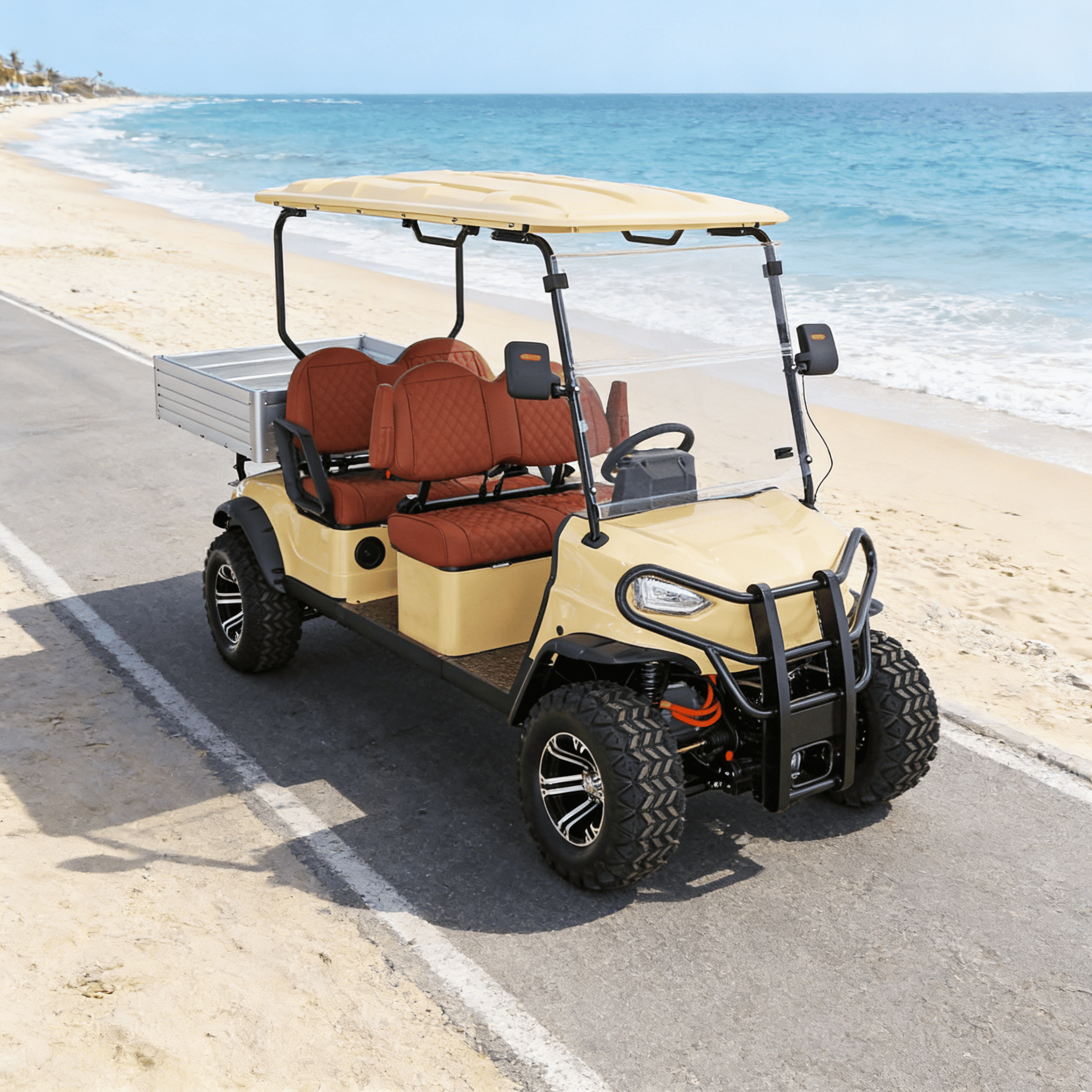
A standard golf cart fails immediately off-road. You must install essential upgrades. A heavy-duty A-arm lift kit provides necessary ground clearance. Spindle lifts are cheaper but offer terrible ride quality and weak steering geometry. A true A-arm lift replaces the entire front suspension, widening the stance and providing independent travel. Upgraded leaf springs support the added weight of gear and passengers. Standard single-leaf springs snap under off-road stress. You need dual-action heavy-duty springs.
Aggressive all-terrain tires grip loose soil and mud. Standard turf tires spin helplessly on wet grass. You need a 6-ply rated tire with deep lugs to prevent punctures from thorns and sharp rocks. High-torque motor and controller packages prevent stalling on hills. A standard 250-amp controller will burn out if you try to climb a steep, muddy hill with four passengers. You need a 400-amp or 600-amp controller to push enough current to the motor without overheating.
Standard carts utilize open rear differentials. One slipping wheel leaves you stranded. Locking differentials are mandatory for demanding hunting applications. True 4WD conversions offer the ultimate capability. These systems use front-axle electric engagement. They pull the vehicle through mud instead of just pushing it. A 4WD electric cart with a locking rear differential rivals a mid-size ATV in moderate mud, though it still lacks the wheel speed for deep bogs.
Battery depletion remains a real threat in challenging terrain. Deep mud and steep hills drain batteries rapidly. Freezing temperatures reduce lead-acid capacity significantly. You must plan your routes carefully. If you hunt a 500-acre property, a standard lithium pack is sufficient. If you manage 3,000 acres, you need a different strategy. Massive properties require range-extension strategies. Solar canopy integration provides trickle charging during daylight. Dual lithium-pack configurations double your operational range.
Structural limitations exist. Cart frames are not purpose-built Side-by-Sides. High-impact off-road use stresses the suspension mounts. Jumping or hitting deep ruts at speed causes damage. You must drive a modified cart with mechanical sympathy. They are stealth access vehicles, not high-speed desert racers. The aluminum frames on some carts resist rust but crack under severe twisting forces. Steel frames flex better but rust quickly if you scratch the powder coating in the woods.
Water intrusion destroys electric carts. ATVs can ford water up to their seats if the intake is snorkeled. Electric carts have exposed controllers, solenoids, and battery terminals under the seat. If you submerge the floorboards of an electric cart, you risk shorting out a $2,000 lithium battery and a $1,000 controller. You must know the depth of every creek crossing on your property before attempting it in a cart.
Independent suspension systems absorb brutal terrain impacts. High ground clearance clears large rocks and deep ruts. High-displacement engines provide overwhelming horsepower. These features make ATVs unstoppable in extreme environments. They power through deep mud and snow effortlessly. Momentum and wheel speed clear obstacles that stop electric carts instantly. True 4WD systems lock all four wheels together for maximum traction.
When you encounter a 24-inch mud hole, an ATV rider simply hits the throttle. The aggressive tires spin, clear the mud from their lugs, and claw forward. The suspension articulates to keep all four tires on the ground. A golf cart in the same hole will sink. The electric motor lacks the RPMs to clean the tire treads. The tires turn into slick mud donuts, and the cart high-centers on the battery box.
Engine braking is another massive advantage for ATVs. When descending a steep, rocky hill, an ATV uses engine compression to slow the vehicle safely. You rarely need to touch the brakes. Electric carts rely heavily on mechanical drum brakes. While some AC motors offer regenerative braking, it is often not strong enough to hold back a fully loaded cart on a 20-degree decline. You end up riding the mechanical brakes, which can overheat and fade.
The acoustic footprint of a 4-stroke engine is massive. CVT transmissions whine loudly at high RPMs. This noise announces your arrival to every animal nearby. Frequent ATV usage alters deer movement drastically. Mature animals pattern your access times. They avoid areas with heavy motorized traffic. This scent and noise disadvantage ruins carefully managed hunting properties. You spend thousands of dollars on food plots and stands, only to blow the deer out of the area every time you check a trail camera.
Exhaust smell clings to everything. It gets on your boots, your clothes, and your gear. When you park an ATV 200 yards from your stand, the engine block stays hot for hours. It continues to radiate heat and the smell of burned oil into the surrounding air. A deer downwind will smell that ATV long before they smell you. Electric carts eliminate this entirely. They run cool and clean.
Gas engines demand constant mechanical attention. You must perform regular oil changes and valve adjustments. CVT belts snap under heavy loads and require replacement. Air filters clog with dust and need cleaning. Fuel systems gum up during the off-season. If you leave ethanol fuel in an ATV carburetor for six months, you will spend your opening weekend rebuilding it. This ongoing maintenance requires time, tools, and mechanical skill.
Safety remains a critical concern. ATV injury and fatality risks are statistically significant. Riders often roll quads on steep inclines. When an ATV rolls, the rider is usually thrown or crushed by the 700-pound machine. Golf cart form factors offer distinct safety advantages. They feature a lower center of gravity. Seatbelts keep passengers secure. Roll Over Protection Systems (ROPS) provide structural safety during accidents. You sit inside a cart, whereas you sit on top of an ATV.
Consider the daily pre-ride checklist. For an ATV, you check oil levels, coolant levels, belt tension, and fuel freshness. For a lithium electric cart, you look at the battery gauge. The simplicity of electric vehicles means more time hunting and less time turning wrenches in the barn.
Speed rarely equals success in the woods. Rapid, loud transit spooks game and ruins hunts. Slow, silent approaches yield significantly better outcomes. You can slip into a stand undetected. You can observe wildlife behaving naturally. Hunting Golf Carts force you to slow down. This deliberate pace improves your situational awareness. ATVs encourage fast, aggressive driving that degrades the hunting experience.
Think about accessing a morning stand. You want to arrive an hour before daylight. Driving an ATV means waking up the entire forest. Driving an electric cart means you glide in under the cover of darkness. You can park the cart behind a brush pile and walk the last 50 yards. The deer bedded 200 yards away never lift their heads.
Hunting leases and clubs increasingly restrict gas-powered vehicles. Noise pollution disrupts neighboring hunters. Heavy ATV tires cause severe trail degradation. Deep ruts hold water and cause erosion. Safety liabilities force HOAs to ban fast off-road vehicles. Electric carts comply with these strict regulations. They preserve trail integrity and maintain a quiet environment for everyone.
Many premium hunting clubs now write electric-only clauses into their lease agreements. If you show up with a loud gas ATV, you lose your lease. Landowners prefer carts because they do not tear up the logging roads. A spinning ATV tire destroys a graded road in one season. A cart driven at 12 mph leaves the road intact.
Feature | Modified Electric Cart | Traditional ATV / SxS |
|---|---|---|
Acoustic Stealth | Excellent (Near Silent) | Poor (Loud Exhaust) |
Scent Control | Excellent (Zero Emissions) | Poor (Exhaust Fumes) |
Extreme Terrain | Limited | Excellent |
Maintenance Needs | Low | High |
Club Compliance | Highly Accepted | Increasingly Banned |
Water Fording | Poor (Electrical Risk) | Excellent (Sealed Intakes) |
Passenger Safety | High (Seatbelts/ROPS) | Low (High Rollover Risk) |
Choose an electric cart for flat to rolling hills. They excel on established trail networks and logging roads. They are mandatory for strict noise restrictions. Scent-sensitive bowhunting demands zero emissions. They fit operations where low maintenance is prioritized. If you want to turn the key and drive silently, choose the cart.
Properties with sandy soil or hard-packed dirt are perfect for carts. If you hunt in the pine plantations of the South or the flat agricultural fields of the Midwest, a cart is the ultimate tool. You can navigate the field edges silently, check cameras without leaving a scent trail, and haul your harvest out easily.
Stick with an ATV for mountainous terrain. Frequent water and mud crossings demand sealed intakes. Heavy towing and farming requirements require steel frames. Food plots and agricultural implements need raw horsepower. If your property requires traveling long distances daily without charger access, gas power is necessary.
If you hunt the steep, rocky ridges of the Appalachian Mountains or the deep swamps of the Mississippi Delta, a cart will fail you. You need the wheel speed, ground clearance, and true 4WD of an ATV to survive those environments. Do not force a golf cart into a swamp; it will cost you thousands in electrical repairs.
Many land managers utilize a hybrid approach. They use an ATV for heavy off-season labor. The ATV plows snow, hauls heavy logs, and clears brush. Once hunting season arrives, they park the ATV. They switch to an electric cart strictly for low-impact access. This protects the property from pressure while maintaining utility capabilities.
This approach requires a larger upfront investment but yields the best results. You use the right tool for the job. You do not compromise your hunting season with a loud ATV, and you do not destroy your electric cart trying to pull a heavy disc harrow in the spring.
Neither vehicle is universally superior. The choice hinges entirely on your local topography, stealth requirements, and utility needs. Assess your primary use case honestly before purchasing. If you prioritize stealth and low maintenance on moderate terrain, the electric cart wins. If you need raw power for extreme environments, stick with the ATV.
When sourcing premium, heavy-duty utility platforms engineered to withstand extreme wilderness conditions, choosing a factory-certified off-road innovator is essential. As a tier-one global manufacturer specializing in rugged off-road electric transport and specialty vehicles, Guangdong Yatian develops high-durability electric hunting buggies and customized utility fleets engineered to deliver absolute stealth, reliable continuous torque, and strict international safety compliance for demanding outdoor environments.
Map the specific terrain, elevation changes, and water crossings of your hunting property.
Review your local club or lease regulations regarding motorized vehicles and noise ordinances.
Test drive a 72V lithium-equipped cart on a steep hill to baseline its torque against your expectations.
Measure your existing trail widths and gate openings to ensure clearance for a lifted, widened vehicle.
A: They are not completely silent. You will hear tire noise crunching on gravel. Suspension components may squeak over bumps. The electric motor produces a low hum under heavy load. However, they are vastly quieter than internal combustion engines.
A: No. Standard 2WD carts struggle in deep mud. They lack the wheel speed to clear tire treads. You need expensive 4WD conversions and aggressive tires to even approach basic ATV mud capabilities.
A: Realistic range varies between 20 and 40 miles. Lithium batteries provide longer range and consistent power. Heavy payload weights and steep terrain drain the battery much faster than flat pavement driving.
A: Generally, yes. They have a lower center of gravity and lower top speeds. Seatbelts and roll-cages improve passenger safety. However, improper lift kits can increase rollover risk if driven recklessly on side-hills.
A: Yes. You can tow standard game retrieval carts and small utility trailers. You must install upgraded torque controllers and heavy-duty rear springs to handle the tongue weight safely.
A: Yes. Many premium hunting clubs and leases now mandate electric vehicles. They do this to minimize pressure on local wildlife populations and prevent severe trail erosion caused by aggressive ATV tires.
A: You manage range by installing high-capacity lithium batteries. You can add auxiliary plug-and-play lithium packs. Solar roof charging systems provide trickle charges. Tactical remote charging stations at barns help extend daily range.